
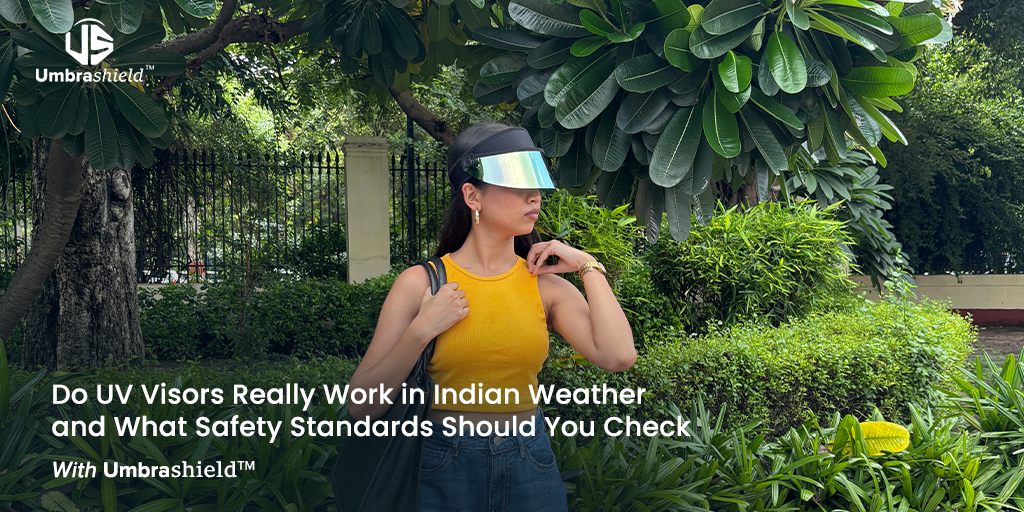
If you live in India, you already know this. Sun exposure here is not mild. It is harsh, constant, and often underestimated. Whether it is humid coastal heat, dry northern summers, or high UV levels even on cloudy days, protecting your face from the sun has become a real concern.
That is why more people are now asking practical questions like do UV visors really work in Indian weather, are UV visors effective against UVA and UVB rays, and what safety standards should you check before buying one. This article answers those questions honestly, without hype, and in a way that actually helps you decide.
UV Visor Buying Guide for Indian Climate Conditions
Indian weather is not uniform. That is the first thing most global sun-protection products fail to understand. High temperatures, humidity, dust, and long hours of sun exposure create a very specific challenge.
A UV visor that works well in Indian climate conditions must handle:
- Strong and direct sunlight for long durations
- High UV index even during morning and evening hours
- Heat that can cause fogging or discomfort
- Daily use for commuting, walking, or outdoor work
Many visors sold online are generic face shields. They may look fine, but they are usually designed for splash protection or hygiene use, not for sun exposure.
A proper UV visor for Indian weather should have:
- Certified UV filtering, not plain plastic
- Clear optical visibility even in bright light
- Lightweight structure so it does not trap heat
- Good airflow to reduce sweating and fogging
This is where purpose-built products matter. Umbrashield is designed specifically around sun exposure rather than general face coverage. That difference becomes obvious when you use it outdoors for longer periods.
Do UV Visors Actually Work in Indian Sun?
Short answer. Yes, but only if they are designed for UV protection.
Clear plastic alone does not stop ultraviolet radiation. UVA and UVB rays can easily pass through untreated materials. This is why many people still experience tanning or pigmentation even while wearing basic face shields.
A UV visor works by using a material or coating that filters ultraviolet rays before they reach your skin. When designed correctly, it acts as a physical barrier against sun exposure while still allowing clear vision.
In Indian conditions, this matters even more because:
- UV intensity is high for most of the year
- Reflection from roads and buildings increases exposure
- Face skin is thinner and more sensitive
Users who switch from basic shields to certified UV visors often notice reduced tanning and less heat discomfort over time.
Are UV Visors Effective Against UVA and UVB Rays?
This is one of the most important questions to ask before buying.
UVA rays are responsible for premature ageing, pigmentation, and long-term skin damage. UVB rays are more intense and cause sunburn and surface damage. Both are present in Indian sunlight.
A good UV visor should block both UVA and UVB rays. If a product does not clearly mention this, it is a red flag.
When checking effectiveness, look for:
- Mention of UVA and UVB protection
- UV blocking percentage, ideally 99 percent or higher
- Clear explanation of how the visor filters UV rays
Umbrashield visors are designed to reduce exposure to both types of rays and also help users visually understand sun damage. This awareness alone changes how people approach daily sun protection.
UV Visor Safety Standards to Look for Before Buying
Safety standards are often ignored in consumer products, but they matter a lot when it comes to sun protection.
Before buying a UV visor, check for:
- UV filtration certification or lab-tested claims
- Optical clarity standards to avoid eye strain
- Safe, skin-friendly materials
- Secure and stable fit
Avoid products that only use vague terms like “sun shield” or “UV safe” without any explanation. If a brand cannot explain how their visor works, it usually means it does not.
A reliable UV visor should also clearly state what it is not designed for. For example, Umbrashield visors are meant for walking, commuting, and general outdoor exposure. They are not designed for two-wheeler riding. This kind of clarity is a good sign of product honesty.
Common Myths About UV Visors in India
One common myth is that UV visors are uncomfortable in hot weather. In reality, discomfort usually comes from poor design, not from the concept itself.
Another myth is that sunscreen alone is enough. Sunscreen helps, but it wears off, needs reapplication, and does not block reflected UV rays effectively. A visor adds a physical layer of protection.
Some people also believe that if the visor is clear, it cannot block UV. That is not true. UV-filtering materials can be transparent and still block harmful rays.
Who Should Consider Using a UV Visor?
UV visors are not just for extreme outdoor workers. They are useful for:
- Office commuters
- People who walk or use public transport
- Individuals with pigmentation-prone or sensitive skin
- Anyone following dermatologist-recommended sun care routines
In Indian cities, even short daily exposure adds up over time. Consistent protection makes a visible difference.
Final Thoughts on UV Visors in Indian Weather
So, do UV visors really work in Indian weather? Yes, if you choose the right one.
The key is understanding that not all visors are equal. A certified UV visor designed for Indian climate conditions can significantly reduce sun exposure to the face. Checking safety standards, UV protection claims, and intended use before buying is essential.
If you are serious about long-term skin protection, a UV visor is not a gimmick. It is a practical tool. And when chosen thoughtfully, it fits easily into daily life without hassle.